Lower Saxony – Scotland
Joint Forum 2026


Get ready for two days of bold ideas, sharp minds, and meaningful transregional collaboration. The European Centre for Advanced Studies (ECAS) invites you to the 7th Lower Saxony–Scotland Joint Forum – where research excellence meets strategic partnership.
For years, the Joint Forum has brought together higher education institutions, research organisations, policymakers, and innovation leaders from both regions. This year’s edition at Technische Universität Braunschweig returns to the Forum’s original spirit: a place of encounter, dialogue, and forward-looking cooperation.
Day 1 opens with a panel discussion on “A Lower Saxony–Scotland Perspective on Science and Universities in the Age of Artificial Intelligence”, followed by interactive workshops and an official reception.
Day 2 focuses on the Lower Saxony – Research and Innovation Scheme. Awardees will present their projects, share insights, and offer practical advice for prospective applicants. Additional workshop sessions will also be available.
Programme – Day 1 (Technische Universität Braunschweig)
Arrival, Registration, and Coffee
Welcome Addresses
President Technische Universität Braunschweig & Spokeswoman Standing Committee on Internationalisation of the Lower Saxonian State Rectors’ Conference
Vice President Research, The Royal Society of Edinburgh
Panel I: A Lower Saxony – Scotland Perspective on Science and Universities in the Age of Artificial Intelligence
Abstract
- Universities and academic institutions (e.g. integration of AI into research, teaching, assessment, and institutional governance; implications for academic standards, skills, and organisational structures)
- AI providers and application partners (e.g. companies and technical partners developing and implementing AI systems for universities; questions of design, deployment, data access, and alignment with academic needs and values)
- Funding bodies, policy makers, and ethics committees (e.g. evaluation of research proposals, regulation, ethical oversight, and the broader impact of AI on research funding, accountability, and higher education policy)
Moderation:
Professor for Information Systems, in particular Data Science, Leuphana University of Lüneburg
Perspective of Universities and Academic Institutions:
Prof. Dr. Roderick Murray-Smith
Professor of Computing Science, University of Glasgow
AI-Providers, Application Partners, Networks and Research Groups:
Karim N. Henein
Thematic Lead AI, Digitalagentur Niedersachsen
Head of Data, The Data Lab
Funding Bodies, Policy Makers, and Ethics Committees:
Head of International Partnerships and Engagement, Arts and Humanities Research Council
Coffee Break
Workshop Sessions
Abstract
This workshop will discuss how Underground Thermal Energy Storage (UTES) can function not as a standalone technology, but as a system-level flexibility asset embedded in urban energy systems, including district heating and cooling (DHC) networks, electricity system and existing subsurface infrastructure such as metro tunnels, legacy mine workings and thermally activated foundations (energy piles), including coexistence with transport infrastructure, groundwater resources and drinking-water protection zones, and subsidence risk areas.
A selection of case studies will allow workshop participants to assess options to enable reliable, low-carbon and dispatchable heat at scale in Europe’s most energy-intensive urban areas, founded on an integrative understanding of the technical, social, economic, organisational, environmental, legal and regulatory systems underpinning the deployment of UTES.
Rankine Chair of Energy Engineering, University of Glasgow
Institute of Sustainability Governance, Leuphana University of Lüneburg
Postgraduate Researcher, University of Glasgow
Abstract
tba
Prof. Dr. Edoardo Patelli
Head of the Centre for Intelligent Infrastructure, Department of Civil and Environmental Engineering, University of Strathclyde
Dr. Matteo Broggi
Deputy Head of the Institute for Risk and Reliability, Leibniz Universität Hannover
Closing Address
Vice President of Entrepreneurship, Transfer, and Internationalization, Leuphana University of Lüneburg & Academic Director European Centre for Advanced Studies
Reception & Whiskey Tasting
Laura-Louise O’Reilly
Director of the Representation of the Scottish Government in Germany
Optional & Self-Paying Dinner
Programme – Day 2 (Technische Universität Braunschweig)
Registration & Coffee
Welcome Address
tbc
Input on Lower Saxony-Scotland Funding Opportunities
Programme Director, Volkswagen Foundation
Research Awards Officer, The Royal Scociety of Edinburgh
Dorothea Fendel
Programme Officer, German Research Foundation
Head of International Partnerships and Engagement, Arts and Humanities Research Council
Head of Innovation, The Data Lab
Coffee Break
Panel II – Research in Partnership – Insights from the Lower Saxony–Scotland Research and Innovation Scheme (Stream II – Excellence Track)
Abstract
Moderation:
Emeritus Vice-Principal (Internationalisation), University of Glasgow & Senior Academic Advisory, European Centre for Advanced Studies
Stream II - Excellence Track Projects:
Abstract
tba
Prof. Dr. Ilja Gerhardt
Leibniz University Hannover
Prof. Dr. Jörg Götte
University of Glasgow
Abstract
Prof. Dr. Graeme Burt
University of Strathclyde
Smart Grid Testing, OFFIS
Smart Grid Testing, OFFIS
Abstract
The long-term vision of STRIDE is to create a design framework for hybrid electric aircraft propulsion systems to enable identification of key inter-system design trades and sensitivities for solutions which balance optimisation of emissions and MRO costs. From this 10 month project, STRIDE will output an initial version of this framework, underpinned by a coupled electrical power-gas turbine propulsion simulation model to identify initial design trades, system sensitivities and balance system design for emissions and deterioration. In this research endeavor, the expertise of the University of Srathclyde (UST) and the Technische Universität Braunschweig (TUBS) are uniquely combined: UST model the electrical part of the propulsion system; TUBS model the gas turbine and the combustion chamber. As part of the Excellence Track Joint Forum, the STRIDE partners will outline the project’s goals and challenges, share insights into the modelling approaches, and present the derived design matrix for investigating future hybrid electric aircraft propulsion systems.
Research Group Leader, Institute of Jet Propulsion and Turbomachinery, Technische Universität Braunschweig
Lecturer Institute for Energy and Environment, Department of Electronic and Electrical Engineering, University of Strathclyde
Research Assistant, Institute of Jet Propulsion and Turbomachinery, Technische Universität Braunschweig
Abstract
tba
Prof. Dr. Melanie Brinkmann
Technische Universität Braunschweig
Lunch Break
Workshop Sessions
Abstract
This workshop will discuss how Underground Thermal Energy Storage (UTES) can function not as a standalone technology, but as a system-level flexibility asset embedded in urban energy systems, including district heating and cooling (DHC) networks, electricity system and existing subsurface infrastructure such as metro tunnels, legacy mine workings and thermally activated foundations (energy piles), including coexistence with transport infrastructure, groundwater resources and drinking-water protection zones, and subsidence risk areas.
A selection of case studies will allow workshop participants to assess options to enable reliable, low-carbon and dispatchable heat at scale in Europe’s most energy-intensive urban areas, founded on an integrative understanding of the technical, social, economic, organisational, environmental, legal and regulatory systems underpinning the deployment of UTES.
Abstract
tba
tbc
Abstract
tba
Dr. Alexandra König
German Aerospace Center, Institute of Transportation Systems, Braunschweig
Stefanie Schöne
German Aerospace Center, Institute of Transportation Systems, Braunschweig
Dr. Alan Logan
Centre for Sustainable Road Freight and the Centre for Logistics and Sustainability in the Edinburgh Business School at Heriot-Watt University
Dr. Neil Ferguson
University of Strathclyde, Faculty of Engineering
Closing Addresses
Emeritus Vice-Principal (Internationalisation), University of Glasgow & Senior Academic Advisory, European Centre for Advanced Studies
Register now
Please register below for this year’s Joint Forum, taking place on Thursday, 19 November + Friday, 20 November 2026 at the Technische Universität Braunschweig.
Participation is free of charge. Registration is open until Sunday, 1 November 2026.


Why attend?
Network
Connect with academics, staff and students from renowned higher education institutions, politicians and experts from industry in both regions.
Collaborate
Explore avenues for interdisciplinary cooperation and initiate research partnerships.
Learn
Gain insights from experts, discover innovative projects, and expand your knowledge horizon.
Engage
Participate in discussions, exchange ideas, and be part of shaping the future of academia.


About
The Joint Forum is an annual, two-day networking event organised by the European Centre for Advanced Studies (ECAS) together with a partner higher education institution in Lower Saxony or Scotland. Acting as a cooperation hub, ECAS connects stakeholders from academia, policy, and innovation to foster sustained exchange between both regions.
Hosted alternately in Lower Saxony and Scotland, the Forum provides a platform for dialogue, knowledge exchange, and the development of new collaborative initiatives. In 2025, the Joint Forum took place at the Royal Society of Edinburgh (RSE) in the context of the partnership between the Lower Saxony Ministry of Science and Culture (MWK), the Volkswagen Foundation, and the RSE, alongside their joint Lower Saxony – Scotland Research and Innovation Scheme. The 2026 edition will be hosted at Technische Universität Braunschweig.
With over 100 participants each year, the Joint Forum supports both the strengthening of existing partnerships and the creation of new ones.
Venue
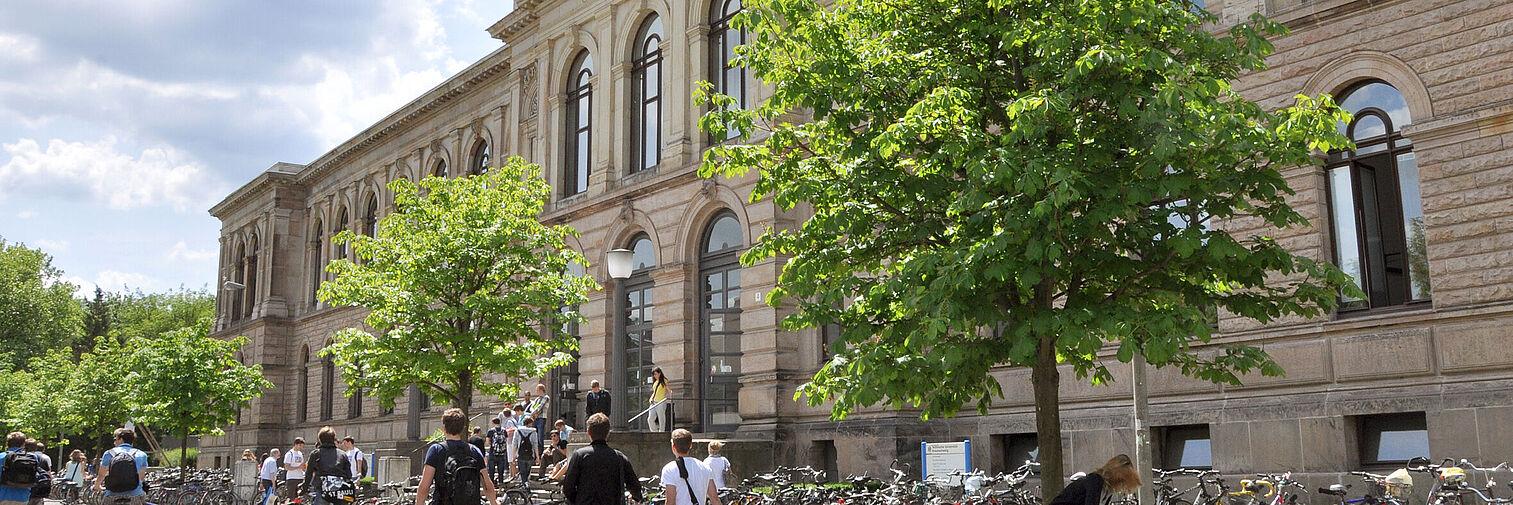
The Technische Universität Braunschweig is one of Germany’s leading technical universities and a member of the TU Alliance. Situated in the heart of Europe’s most research-intensive region, it pursues solutions to tomorrow’s challenges in interdisciplinary, cross-faculty research centers. Its activities are organized around four core research priorities: Mobility, Metrology, Engineering for Health, and the City of the Future.
TU Braunschweig benefits from an outstanding ecosystem that brings together universities, federal research centers, Helmholtz Institutes, Fraunhofer Institutes, Leibniz Association research institutions, museums, libraries, and even a research airport. This environment offers rich interdisciplinary research and networking opportunities for both researchers and students. Its internationally oriented degree programs are characterized by strong practical relevance through research projects, excellent networking, and active technology transfer.